
Under a Black Flag
Avast, ye

Newsletter #224
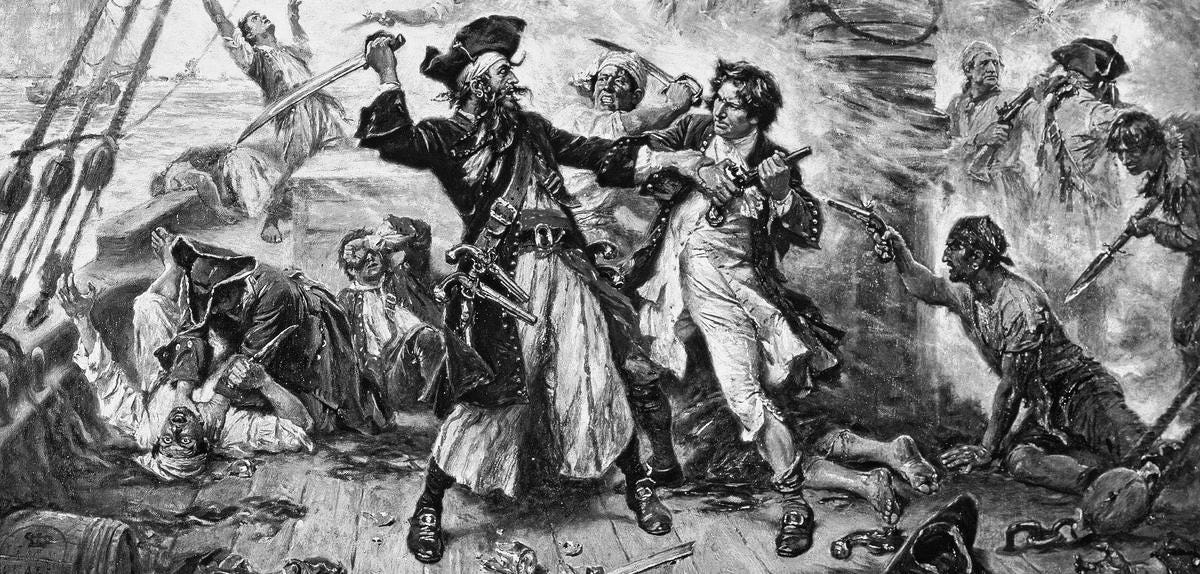
The recently-released remaster of Assassin’s Creed: Black Flag, the pirate-themed entry in the long-running historical-and-science-fiction mashup (that’s a lot of hyphens) has loomed largest for me this week, I’ve thought a lot about the series at large this week and why earlier entries don’t work for me while latter entries do and I think it largely boils down to a shift in series focus, particular in its overarching narrative and its historical fidelity.

If you don’t know anything about the Assassin’s Creed franchise, a brief intro: the series follows the exploits of various members of a historic order of capital-A Assassins as they struggle against the villainous Templars for control of “precursor” artifacts left over from a technological advanced race of beings that evolved on Earth prior to humanity. The deep lore of the franchise is a largely incomprehensible and forgettable mess, and - in the early games - drip feeds to the player through vignettes that frame the larger story within the context of the protagonists’ ancestor’s kidnapping by the Abstergo Corporation in the relatively near (think cyberpunk) future. You see, Abstergo is a front for the Templars who are forcing Desmond - the protagonists’ ancestor - to relive his assassin forebears’ memories via VR (while they watch) so they can find these precursor artifacts.

It’s all a bit much, so Black Flag’s original release came as a breath of fresh air that turned the volume way down on the weird cyberpunk frame story and instead focuses on what the game does best: tell fun adventure stories against a largely historically accurate backdrop. Assassins and Templars and even a healthy dash of the cyberpunk techie weirdness are in there, but the gameplay remains focused on the historical segments and doesn’t force much interaction with the deep lore. As such, the narrative moves at a breezier clip and the precursor artifact in this game feels like the traditional pirate treasure Macguffin rather than a necessary connection to the wider franchise narrative. With this being the case, it makes the game largely more accessible than previous entries; everything you need to know about the central conflict gets relayed during the well-integrated tutorial prologue.
The remastered edition of the game doesn’t offer much new to the thirteen year old game, but does smooth the rough edges, updates the visuals and performance, makes minor QoL tweaks to other systems, and trades out the original DLC for new missions that follow the main - rather than side - character’s story. I’m largely ambivalent towards “historical” games for reasons that would fill several of these newsletters but, quite honestly, boils down to me preferring to engage with fantastic worlds, but the latter entries in the Assassin’s Creed franchise do a wonderful job of balancing historical accuracy with engaging game design and that shift in focus was originally signaled by the change in character and narrative focus in Black Flag. I’d mostly recommend exploring those games that cover history that interests you, but - doing that - you can’t go wrong.
Y’all have a good week!
Wado!